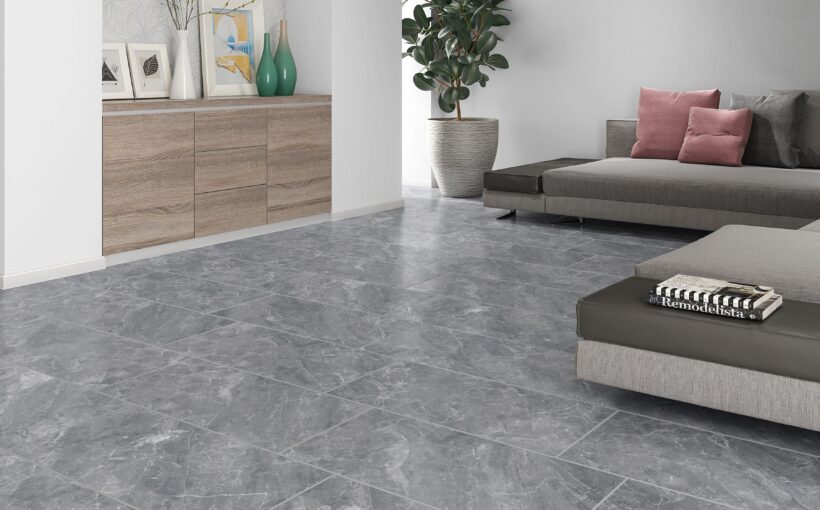
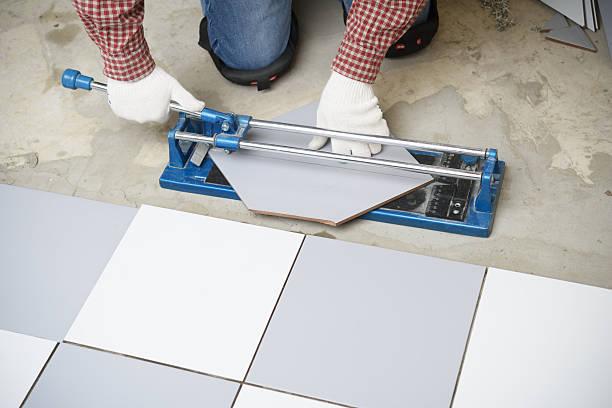
When it comes to stylish tile patterns in 2025, herringbone and chevron are two of the most popular choices among designers and homeowners. Both create dynamic, eye-catching patterns that can transform floors, walls, and splashbacks—but they are not the same. Understanding the differences, design applications, materials, and colour trends will help you choose the right pattern for your home.
This guide breaks down the key distinctions between herringbone and chevron, popular layouts, materials, colours, pros and cons, and modern styling tips to ensure your interior design is both practical and visually stunning.
Herringbone vs. Chevron: Understanding the Difference
At first glance, herringbone and chevron look similar, but they have distinct geometric differences:
- Herringbone: Rectangular tiles are laid in a staggered zig-zag pattern, creating a broken V shape. The ends of the tiles are offset, which gives a dynamic, woven appearance.
- Chevron: Tiles are cut at an angle (usually 45° or 60°) and arranged to form a continuous V shape. This creates a clean, seamless chevron pattern with precise lines.
Quick Tip: Herringbone is slightly more casual and textured, while chevron offers a sharp, formal, and modern aesthetic.
See more: How Construction Surveyors Contribute to Successful Projects
Design Ideas for Herringbone and Chevron Tiles
1. Kitchen Splashbacks
- Herringbone: Works beautifully behind sinks and cooktops, adding movement and texture.
- Chevron: Perfect for bold, statement splashbacks where clean lines are desired.
Pair both with neutral cabinetry for a balanced look, or contrasting countertops for drama.
2. Bathroom Walls and Floors
- Herringbone: Softens the space and creates a sense of flow in showers or behind vanities.
- Chevron: Ideal for feature walls or accent floors, especially when using bold colours like navy, black, or deep green.
3. Living Areas and Hallways
- Herringbone: Wood-look porcelain or natural timber herringbone floors add warmth and texture to living rooms and hallways.
- Chevron: Creates striking geometric floors that feel contemporary and luxurious in open-plan spaces.
Popular Layouts in 2025
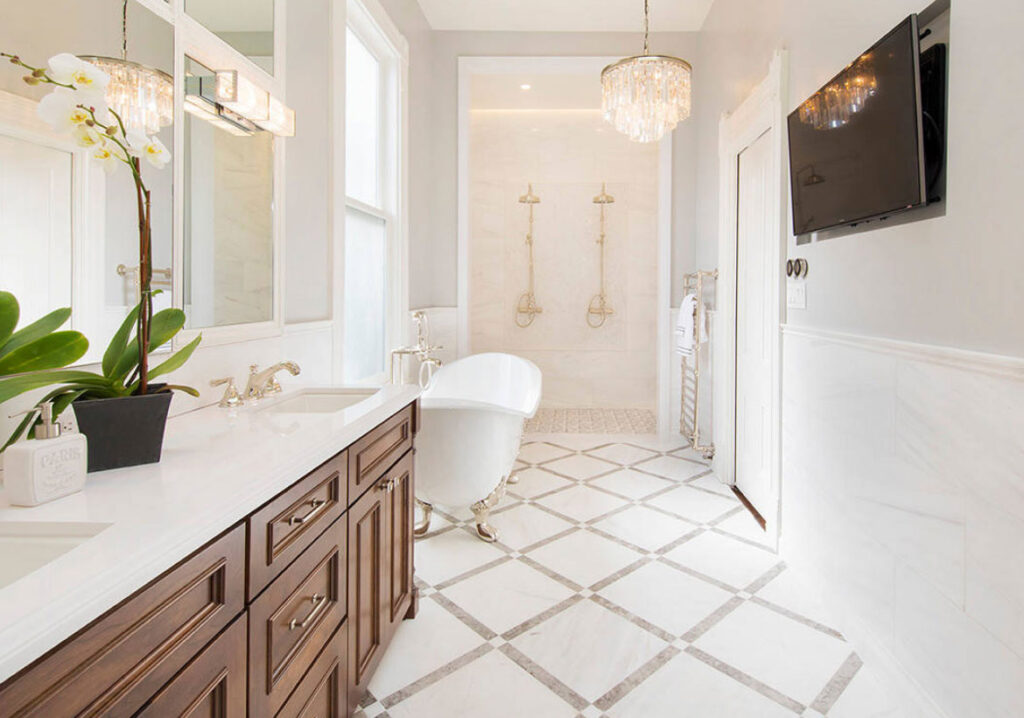
Herringbone Layouts
- Classic 45-Degree Herringbone: Traditional zig-zag ideal for floors and splashbacks.
- Straight Herringbone (90-Degree): Clean, vertical or horizontal alignment for minimalist spaces.
- Double Herringbone: Two tiles per leg of the V, creating a bold pattern.
Chevron Layouts
- Straight Chevron: Tiles aligned to form continuous V shapes; perfect for floors or wall features.
- Stacked Chevron: Adds texture with repeated V motifs, ideal for modern bathrooms.
- Contrasting Colour Chevron: Uses alternating shades to emphasize the geometric design.
Materials for Herringbone and Chevron Tiles
The choice of material determines both durability and aesthetics:
1. Ceramic
- Affordable, versatile, and ideal for walls and splashbacks.
- Easy to maintain with minimal effort.
2. Porcelain
- Durable and water-resistant, suitable for floors and wet areas.
- Mimics natural stone or timber without the maintenance.
3. Natural Stone
- Marble, travertine, and slate create luxury finishes.
- Needs sealing and careful maintenance.
4. Wood-Look Tiles
- Porcelain tiles mimic timber with moisture resistance.
- Works well in kitchens, bathrooms, and living areas.
5. Glass Tiles
- Reflective, bright, and modern.
- Ideal for chevron splashbacks and accent walls.
Trending Colours for 2025
- Neutral shades: Cream, beige, taupe, and soft greys for timeless elegance.
- Deep tones: Navy, charcoal, and emerald green for bold statements.
- Pastels and muted colours: Sage, powder blue, and blush for contemporary charm.
- Textured and handmade finishes: Add depth and character to feature walls or floors.
Pros and Cons of Herringbone and Chevron
Herringbone Pros
✔ Adds texture and visual movement
✔ Works in traditional and modern interiors
✔ Flexible for walls, floors, and splashbacks
✔ Makes small spaces feel larger
Herringbone Cons
✖ Slightly higher installation cost due to precise cuts
✖ Can look busy in small rooms with bold colours
Chevron Pros
✔ Clean, modern, and sophisticated
✔ Continuous V pattern creates seamless elegance
✔ Ideal for statement walls or floors
Chevron Cons
✖ Requires more precise tile cutting
✖ Professional installation recommended to avoid misalignment
✖ Typically higher cost than standard layouts
Modern Styling Tips for 2025
1. Use Patterns Strategically
Both patterns work best in feature areas. Herringbone adds subtle texture, while chevron creates bold statements. Avoid covering entire small rooms with chevron to prevent overwhelming the space.
2. Grout Colour Matters
- Light grout for subtle patterns
- Dark grout for emphasis
- Tone-on-tone for modern minimalism
3. Mix Materials and Finishes
Combine matte floors with glossy walls, or porcelain with natural stone, to enhance depth and dimension.
4. Highlight with Lighting
LED strips, natural sunlight, or pendant lights accentuate the tile texture and geometric patterns.
5. Pair with Minimal Fixtures
Keep cabinetry, faucets, and accessories simple so the tile pattern remains the focal point.